International inheritances are not unusual. They are the reality facing thousands of foreign property owners on the Costa Blanca and across Spain who have never asked themselves what will happen to their home when they die, or what their heirs in the UK, the Netherlands, Belgium or Germany will need to manage when that moment arrives.
In this guide from Sol-4 Gestión, we explain what makes an international inheritance complex, which law applies to assets located in Spain, the most common mistakes and what concrete steps can be taken in advance to protect heirs from unnecessary complications.
What Is an International Inheritance and Why Is It More Complex?
An international inheritance is one in which the deceased, the heirs or the assets are located in different countries. This situation affects three dimensions that are straightforward in a domestic inheritance but become genuinely complex in an international one:
- The applicable law: which legal system governs the succession? The law of the country where the deceased lived? The law of their nationality? The law of the country where the assets are located?
- Taxation: in which country or countries are taxes due? Is there a risk of double taxation?
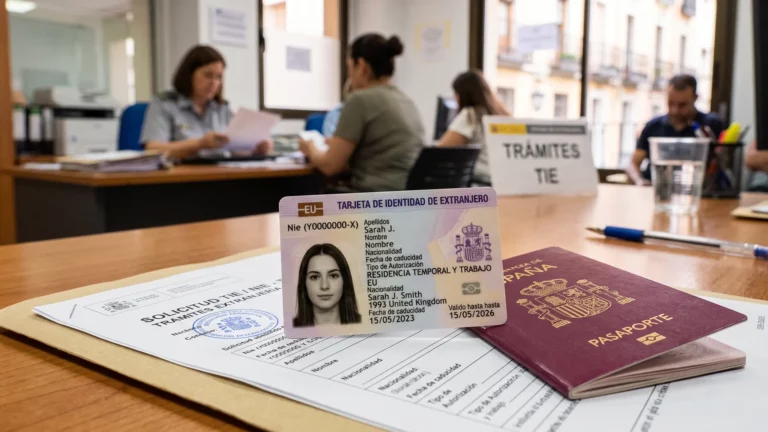
- Documentation: death certificates, wills and declarations of heirs issued abroad must be apostilled and accompanied by a sworn translation into Spanish to have legal effect in Spain.
On top of these three complexities, there is the factor of time. In Spain, inheritance tax must be settled within six months of the date of death — and that deadline runs the same whether the heirs live ten minutes away or ten hours away by plane.
Which Law Applies to an Inheritance With Assets in Spain?
This is the first question to resolve, because everything else depends on it: who the legitimate heirs are, how much of the estate can be freely disposed of, whether Spanish forced heirship rules apply and how the assets are distributed.
The European Succession Regulation (EU 650/2012)
Since 2015, inheritances with cross-border elements within the European Union have been governed by EU Regulation 650/2012. Its general rule is straightforward: the applicable law is the law of the country where the deceased was habitually resident at the time of death.
This means that if a British or Dutch citizen dies as a habitual resident of Spain, their estate is governed by Spanish law, including Spain’s forced heirship rules (legítimas). However, the Regulation allows an important exception: any EU citizen can designate in their will that the law of their nationality should apply instead of the law of their habitual residence. That express declaration, made before a notary, can substantially change the outcome of the succession.
The Regulation applies to all EU member states except Denmark and Ireland, which have not adopted it.
Citizens of Non-EU Countries
For heirs or deceased persons resident in non-EU countries — the UK post-Brexit, Norway, the United States, Australia or others — the European Regulation does not apply directly. In those cases, the law governing assets located in Spain is generally Spanish law, but the management of the process can be more complex depending on whether a bilateral treaty exists between Spain and the relevant country.
In all cases, real estate located in Spain is subject to Spanish law as regards its Land Registry registration and the settlement of inheritance tax with the Spanish Tax Agency.
The Most Common Mistakes in International Inheritances
Not Having a Spanish Will
This is the most common mistake and the one with the most significant consequences. A foreign national with a property in Spain who only has a will drawn up in their home country forces their heirs through a longer, more expensive and more uncertain process.
Without a Spanish will, the heirs must obtain the Certificate of Last Wills (even if the result is negative), process a declaration of heirs before a Spanish notary, and in many cases coordinate documentation between two different notarial systems. A properly drafted Spanish will eliminates the vast majority of these complications.
In addition, if the testator is an EU citizen and wishes to use EU Regulation 650/2012 to elect the law of their nationality, that election must be stated expressly in the will. Without it, the law of the country of habitual residence applies automatically.
Not Knowing About the Six-Month Deadline
Inheritance tax in Spain must be settled within six months of the date of death. If the heirs live abroad and have no legal representation in Spain, that deadline can be very tight: the NIE needs to be obtained, a bank account opened, foreign documents apostilled, a fiscal representative appointed and all documentation assembled before the Modelo 650 can be filed with the Tax Agency.
An extension of a further six months is possible, but it must be requested within the first five months of the original deadline. Once that window closes, interest on the unpaid amount begins to accrue.
Failing to Value Assets Correctly
The inheritance tax base is calculated on the market value of the assets at the date of death. An incorrect valuation — whether too low or too high — can cause problems with the Tax Authority. The Tax Agency has the power to review declared values, and a significant discrepancy can result in a supplementary tax assessment with interest charges.
Not Checking for Debts or Encumbrances on the Property
Before accepting an inheritance, it is important to verify whether the properties have outstanding mortgages, unpaid community fees, overdue property tax receipts or any other charge that may transfer with the property. Accepting an inheritance without this check can turn an asset into a liability.
Failing to Appoint a Fiscal Representative in Spain
Non-resident heirs who are not EU or EEA citizens are legally required to appoint a fiscal representative with residence in Spain to manage the tax with the Tax Agency. Failing to do so can stall the process or result in penalties.
The Risk of Double Taxation
One of the main concerns for foreign heirs is the risk of paying tax on the same inheritance in two different countries: in Spain, on the assets located there, and in their country of residence, on the entire inherited estate.
Spain has double taxation treaties with a limited number of countries specifically covering inheritance. Among the countries from which Sol-4 Gestión’s clients most commonly come, Germany is the only one with which Spain has a specific bilateral treaty covering inheritance tax (the Spanish-German Convention of 3 March 1966). For the UK, the Netherlands and Belgium, no such specific inheritance tax treaty exists, although income and wealth tax treaties do apply.
In practice, many countries allow the tax paid in Spain to be deducted from the liability in the home country, which mitigates (though does not always eliminate) the double burden. Each case must be analysed individually, based on the legislation of both countries and the type of assets inherited.
Documentation Required for an International Inheritance in Spain
The core documentation required by the Tax Agency for the Modelo 650 in inheritances with an international element is the same as for any non-resident inheritance, with one important addition: all documents issued abroad must be presented with the Hague Apostille and a sworn translation into Spanish.
The documents typically required are:
- Death certificate (apostilled and translated if issued abroad).
- Certificate from the Spanish General Registry of Last Wills (even if the result is negative).
- Will or declaration of heirs (apostilled and translated if issued abroad).
- NIE of the heirs.
- Nota simple from the Spanish Land Registry for any real estate.
- Bank certificates showing account balances at the date of death.
- Deed of inheritance acceptance or inventory of assets and heirs.
If the deceased was an EU citizen and a European Certificate of Succession had been issued under EU Regulation 650/2012, this can be submitted in place of the death certificate and the will or declaration of heirs.
How to Plan Ahead to Protect Your Heirs
An international inheritance does not have to be a problem for heirs if the property owner has taken the right steps in advance. The most effective measures are:
Granting a Spanish Will
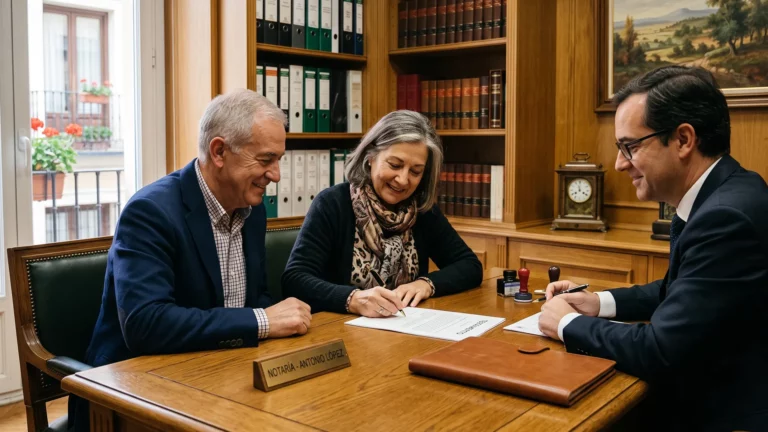
This is the simplest and highest-impact step. A will drawn up before a Spanish notary allows clear designation of heirs, enables EU citizens to choose their national law, and makes the entire administration process significantly easier for heirs from day one.
Appointing a Legal Representative in Spain
Granting a power of attorney to a trusted lawyer in Spain means that the entire inheritance process can be managed in an orderly way and within legal deadlines, without heirs needing to travel for every procedure.
Planning the Structure of the Estate
In certain cases, the way in which assets are held in Spain (individual ownership, joint ownership, through a company) can have a meaningful impact on the tax burden of the inheritance. A prior review with a specialist adviser allows informed decisions to be made before the moment arises.
Checking the Legal and Registry Status of Properties
Before an inheritance occurs, it is worth confirming that properties are correctly registered at the Land Registry, that there are no hidden encumbrances and that all documentation is in order. Resolving a registry issue while the owner is still alive is incomparably simpler than attempting to do so during the administration of an estate.
Manage Your International Inheritance with Sol-4 Gestión
If you have inherited assets in Spain from abroad, or if you want to plan the transfer of your estate to protect your heirs, Sol-4 Gestión can help.
Through our inheritance services in Spain, we manage the entire process: from obtaining the NIE and power of attorney, to valuing the estate, filing the Modelo 650 with the Tax Agency, drafting the deed of inheritance acceptance and registering the change of ownership at the Land Registry. We also act as fiscal representatives in Spain for non-resident heirs.
We have been working on the Costa Blanca with foreign property owners for over 25 years and have in-depth experience with the specific documentation, legal systems and tax considerations that arise in international inheritances from the UK, the Netherlands, Belgium and Germany.
We work in English and Spanish. We respond within 24 hours.
Contact us and we’ll review your situation with no obligation.
Frequently Asked Questions About International Inheritance in Spain
It depends on several factors. For EU citizens, EU Regulation 650/2012 establishes that the law of the country of the deceased’s habitual residence applies, unless they expressly chose the law of their nationality in their will. For non-EU citizens, real estate in Spain is subject to Spanish law in terms of Land Registry registration and tax.
If you are an EU citizen, yes: EU Regulation 650/2012 allows you to choose the law of your nationality to govern your entire succession. That choice must be stated expressly in your will.
It depends on the countries involved and the type of assets. Spain does not have bilateral double taxation treaties specifically covering inheritance with most Western European countries. However, many countries allow the tax paid in Spain to be deducted from the liability at home. Each case must be assessed individually.
The deadline for settling inheritance tax in Spain is six months from the date of death. An extension of a further six months is possible, provided it is requested within the first five months of the original period.
It is not legally required, but for an international inheritance involving real estate it is as close to essential as anything gets. The documentary complexity, the tax deadlines and the need to coordinate with multiple institutions make attempting it without specialist legal representation a considerable risk.
The legal succession order of the applicable law applies. Under Spanish law, that order is: children and descendants, parents and ascendants, spouse, siblings and nephews or nieces, and finally the State. The process is significantly longer and more expensive than when a valid will exists.
Yes. In Spain there is a mechanism known as acceptance under benefit of inventory (aceptación a beneficio de inventario), which allows an heir to accept the inheritance while limiting their liability to the value of the inherited assets. This means the deceased’s debts cannot be claimed against the heir’s own personal estate.