Self-employed registration for a foreigner in Spain isn’t a single procedure: it depends on whether you’re an EU citizen or not, and what type of residence permit you hold at the time you start. Mixing up the steps for one case with the other is why so many foreigners get stuck before they’ve even issued their first invoice.
Both EU citizens and non-EU nationals can work as self-employed in Spain, but the requirements differ radically between the two. An EU citizen only needs a NIE and the EU registration certificate; a non-EU foreigner, on the other hand, also needs a specific self-employment work permit.
In this guide by Sol-4 Gestión, we explain, using official data from Spain’s Ministry of Inclusion, Social Security and Migration and the Social Security General Treasury, who can become self-employed in Spain as a foreigner, what documentation you need depending on your situation, and how registering with the tax authority and Social Security works step by step.
Who Can Become Self-Employed in Spain as a Foreigner
The key difference lies in whether you’re a citizen of the European Union (or the European Economic Area and Switzerland) or from outside it:
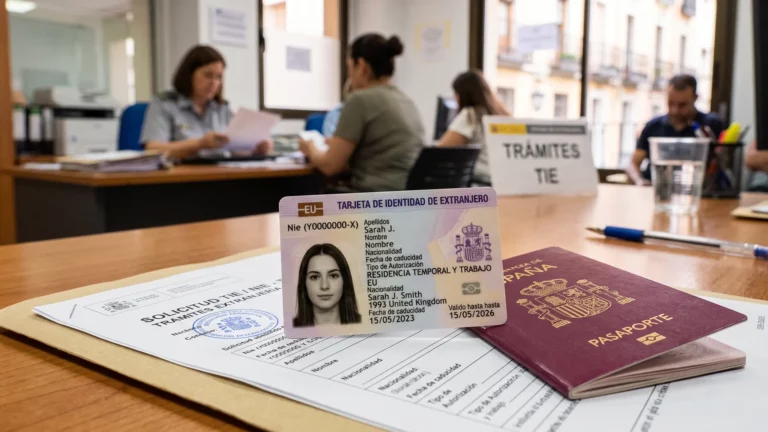
- EU foreign nationals: the process is straightforward. You don’t need a visa or a specific work permit — just a NIE and the EU Registration Certificate, both processed at the Foreigners’ Office or the National Police station.
- Non-EU foreign nationals: you need to meet two requirements: hold a residence permit (temporary or long-term) and a self-employment work permit. Without both, you can’t legally register.
Requirements to Become Self-Employed as a Foreigner, by Situation
The requirements to become self-employed as a foreigner vary significantly depending on the permit you already hold:
| Situation | What you need |
| Temporary residence permit authorising self-employment | You already meet both requirements: you can register directly |
| Temporary residence permit authorising employed work | You need to apply for a modification through form EX-07 |
| Long-term residence permit | You can work under the same conditions as a Spanish national, with no extra procedure |
| No residence permit at all | You need to apply for temporary residence and self-employment authorisation through the Spanish consular office in your country |
If you’re becoming self-employed in Spain as a foreigner from outside the country, the application must be submitted in person at the consular office, completing the official form, and the standard processing time is around 3 months.
Required Documentation and Form EX-07
If you already hold a temporary residence permit but it only authorises employed work, you need to apply for a modification through form EX-07 at the Foreigners’ Office, along with:
- A copy of your valid passport or travel document.
- Any specific authorisations or licences required for your activity.
- A document proving your professional qualification.
- Proof that the relevant fees have been paid.
- A project outline of the activity you plan to carry out.
This self-employment work permit is granted for one year, limited to a specific geographic area and sector of activity, so it’s worth keeping its renewal in mind.
Registering With the Tax Authority and Social Security
Once the work permit is sorted, the registration process is the same for any self-employed worker, foreign or Spanish. According to Spain’s Social Security General Treasury, you need:
- Your IAE (Economic Activities Tax) code and the tax office you belong to.
- Your CNAE activity code.
- The start date and address of your activity.
- An estimate of your annual net income, to choose your contribution base.
- A bank account to set up direct debit for your monthly contribution.
The timing matters: you must apply for registration before starting your activity, up to a maximum of 60 days in advance. If you start working before registering, Social Security treats it as a late registration, with the consequences that come with it.
How Much Does It Cost to Be Self-Employed in Spain
On top of the monthly Social Security contribution — which varies depending on your estimated annual net income — as a self-employed worker you’ll also need to account for:
- VAT, declared quarterly on your invoices, deducting any VAT you’ve paid on expenses.
- Personal income tax, at a rate ranging from 19% to 47% depending on your income.
- Costs specific to your activity: tools, renting premises or an office, and tax and accounting support to handle your quarterly filings so you don’t have to keep track of the calendar yourself.
Common Questions: Passport, NIE and Self-Employment
A few specific questions that come up regularly among foreigners looking to register:
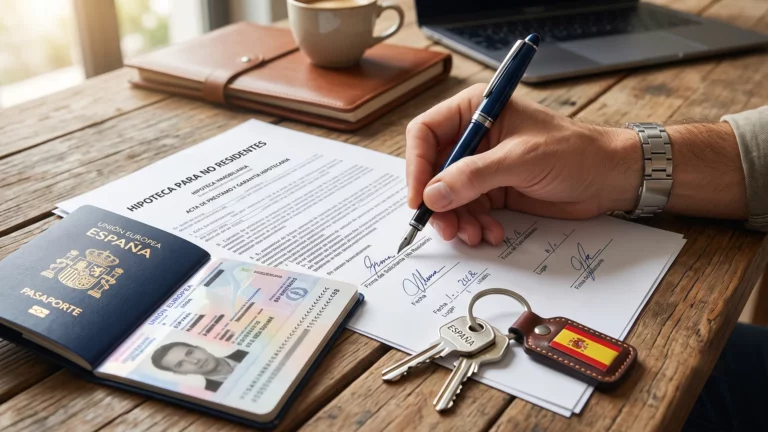
- Can I register as self-employed with just a passport? No. A passport identifies who you are, but any tax or employment procedure in Spain requires a NIE.
- Can I register as self-employed with a NIE? It depends on what the residence permit tied to that NIE authorises. If it authorises self-employment, yes. If not, you need the prior modification first.
- Can I be self-employed with a NIE authorised for employed work? Not directly. If your NIE is linked to a permit that only authorises employed work, you first need to apply for the self-employment work permit through form EX-07.
What Starts as a Simple NIE Can Turn Into Three Parallel Procedures
Many foreigners come to Sol-4 thinking they only need a NIE, only to discover that their actual situation involves three procedures running at once: the NIE itself, self-employed registration, and — if they also own a property in Spain — their annual non-resident tax declaration.
If you haven’t yet obtained your identification document, our guide on how to get a NIE number in Spain walks through the full process, both from within Spain and from a consulate.
And if you already own property and have a non-resident declaration pending, keep an eye on the Modelo 210 deadlines, which run in parallel to any self-employment procedure you may be handling.
At Sol-4 Gestión, we coordinate all three at once for foreign self-employed workers on the Costa Blanca: which permit you need, registration with the tax authority and Social Security, and the quarterly tax follow-up afterwards.
Frequently Asked Questions About Registering as a Foreign Self-Employed Worker
A residence permit (temporary or long-term) and a self-employment work permit. With both, you can register with the tax authority and Social Security.
Yes, it’s much simpler. You only need a NIE and the EU Registration Certificate, with no visa or additional work permit required.
If you apply through your country’s consular office, the standard processing time is around 3 months.
You need to apply for a modification through form EX-07 at the Foreigners’ Office before you can register as self-employed.
Up to a maximum of 60 days before starting your activity. Registration must be completed before you start working.
It’s treated as a late registration, with the administrative consequences that come with it before Social Security.
It’s granted for one year, limited to a specific geographic area and sector of activity, so its renewal needs to be kept in mind.
It depends on the residence permit tied to that NIE. If it authorises self-employment, yes. If not, you need to apply for that authorisation first.