Yes, it’s possible to get a non-resident mortgage in Spain, and more and more foreigners are doing exactly that. But the terms aren’t the same as for a resident: the bank will ask you for more upfront savings, different documentation, and, almost always, a slightly higher interest rate. None of this is a reason to rule out Spanish financing, but it’s worth knowing before you fall in love with a specific property.
Many foreign buyers assume the only option is financing the purchase from their home country. That’s not always true, and in many cases a Spanish mortgage can be just as competitive as one from abroad, especially once the bank is familiar with the type of transaction you’re proposing.
In this guide by Sol-4 Gestión, we explain exactly what a non-resident mortgage is, what documents banks ask for, how much they typically lend, what extra costs you should plan for, and how the process works step by step.
What Is a Non-Resident Mortgage?
A non-resident mortgage is a home loan designed for people — foreign or Spanish — who don’t have their tax residency in Spain and want to finance a property purchase there. Under Spanish law, you’re considered a non-tax-resident if you spend fewer than 183 days a year on Spanish soil, regardless of your nationality.
In terms of structure, a mortgage for foreigners is essentially the same as a conventional mortgage: it can be fixed-rate, variable, or mixed. What changes are the specific terms, and that’s what’s worth understanding before you start comparing offers.
What Banks Will Ask For: Documents and Requirements
The requirements for a non-resident mortgage are more extensive than for a conventional one, because the bank needs to piece together your financial standing without direct access to your history in Spain. In general, you’ll need to provide:
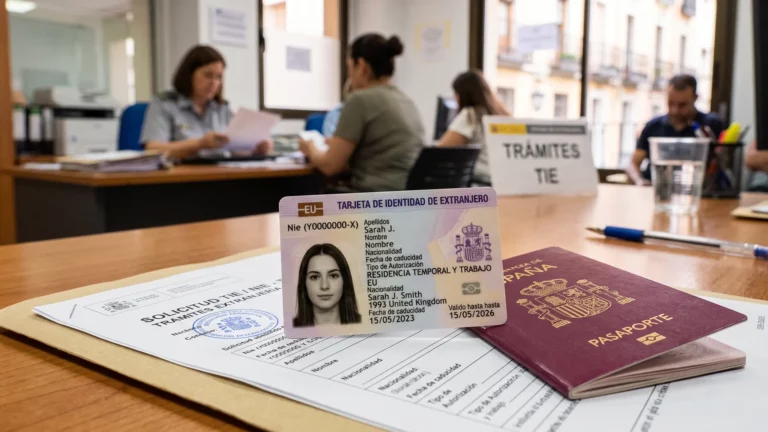
- Passport and NIE (Foreigner Identification Number), essential for any financial transaction in Spain.
- Certificate of tax residency from your home country.
- Proof of income: employment contract, recent payslips, or the latest tax return if you’re self-employed.
- Bank statement covering the last year of transactions.
- Credit history or a risk report from your country of residence.
- A statement of your current assets: bank accounts, other properties, investments.
- The nota simple of the property you want to buy and the deposit contract (arras) or purchase agreement.
You’ll also be expected to show job stability and a reasonable level of debt: following the Bank of Spain’s recommendation, the monthly mortgage payment shouldn’t exceed 30% to 35% of your income once your other debts are added in. Any documentation issued outside Spain will need to be presented with a sworn translation.
How Much Will Banks Lend a Non-Resident?
Here’s the difference that surprises foreign buyers the most: the financing percentage for non-residents is noticeably lower than for a resident.
| Resident in Spain | Non-resident | |
|---|---|---|
| Typical financing | Up to 80% of appraisal or purchase value | Between 60% and 70% |
| Repayment term | Up to 30 years | Generally shorter |
| Interest rate | Standard | Usually higher |
| Maximum debt-to-income | Around 30-35% of income | Around 30-35% of income |
In practice, this means that if the bank only finances 60-70% of the price, you need to have the rest saved, plus the costs associated with the transaction. It’s why many foreign buyers end up needing more upfront capital than they originally expected.
Which Banks Offer Non-Resident Mortgages in Spain
Most major Spanish banks offer specific products for non-residents, although each one applies its own criteria based on nationality, the applicant’s country of tax residency, and their risk profile. Banks such as Banco Sabadell and Bankinter, for instance, publicly detail their terms for this type of mortgage, and both agree on one point: the more predictable your legal and tax framework at home, the easier it is to obtain favourable terms.
Not every bank grants non-resident mortgages equally: some are more cautious with applicants from outside the European Union, since enforcing a mortgage guarantee abroad in the event of default is more complex. That’s why comparing several banks — rather than settling for the first offer — usually makes a real difference to the final terms.
How to Get a Mortgage in Spain as a Non-Resident, Step by Step
Step 1: Gather Your Documentation in Advance
Before contacting any bank, gather your certificate of tax residency, proof of income and credit history. Having it ready from the start speeds up the initial assessment considerably.
Step 2: Run a Simulation and Compare Banks
Most banks offer free online simulators with no commitment. They give you an approximate monthly payment based on your income and the amount requested, letting you compare terms across several banks before committing to any of them.
Step 3: Submit Your Application
The bank will assess your financial standing and, if things move forward, will provide you with the Pre-contractual Information Sheet (FIPRE), outlining the initial loan terms.
Step 4: Receive the Binding Offer (FEIN)
If the process continues, the bank prepares the European Standardised Information Sheet (FEIN), setting out the final terms of the loan. You typically have around ten days to review and accept it.
Step 5: Sign Before a Notary
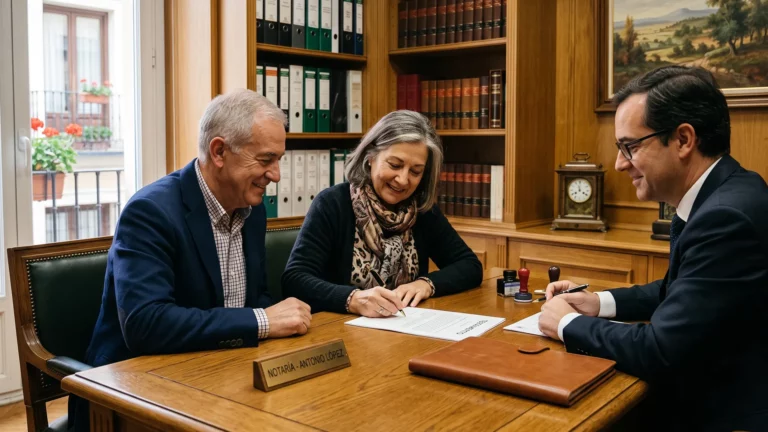
Once the offer is accepted, the bank sends the documentation to the notary, the deed is prepared, and it’s signed — usually on the same day as the property purchase itself.
Extra Costs to Add on Top of Your Down Payment
Beyond the percentage the bank won’t cover, you need to factor in the costs associated with the purchase itself, which typically run between 10% and 15% on top of the property price:
- Purchase taxes: ITP (transfer tax) for resale properties, or VAT + AJD (stamp duty) for new builds.
- Notary and Land Registry fees.
- Property valuation.
- Administrative fees and, in your case, sworn translation of documents.
Tips to Improve Your Chances of Approval
- Show savings that are stable over time, not just a one-off figure in your account.
- Keep your income easy to document: clear payslips, an up-to-date tax return.
- Avoid taking on other debts right before applying for the mortgage.
- Compare terms across several banks: the differences between non-resident mortgage offers can be considerable.
- Opening a bank account in Spain, while not mandatory, tends to make the whole process smoother.
Before You Think About the Mortgage, Make Sure the Property Is Clean
A well-negotiated mortgage isn’t worth much if the property you’re financing has hidden debts, encumbrances or unresolved planning issues.
At Sol-4 Gestión, we represent foreign buyers on the Costa Blanca: we check the real legal and planning status of the property before you sign, handle your NIE — essential for any mortgage application — and represent you before the notary, whether or not bank financing is involved.
Frequently Asked Questions About Non-Resident Mortgages
For tax purposes, you’re considered a non-resident if you spend fewer than 183 days a year in Spain, regardless of your nationality.
Typically between 60% and 70% of the appraisal or purchase value, compared to the 80% usually financed for residents.
Passport and NIE, certificate of tax residency, proof of income, credit history from your home country, a bank statement covering the last year, and the property documentation you’re buying, all with sworn translation where needed.
Generally, yes. Banks tend to apply a somewhat higher interest rate on non-resident mortgages, given the greater risk they perceive in these transactions.
Yes. The NIE is the identification requirement, not residency. You can apply for a non-resident mortgage with your NIE and a certificate of tax residency from your home country.
Between 10% and 15% on top of the property price, to cover taxes, notary, registry, valuation and administrative fees.
Following the Bank of Spain’s recommendation, the monthly payment on all your debts (including the mortgage) shouldn’t exceed 30-35% of your net income. It’s the same standard applied to residents.
No. Each bank applies its own criteria based on your nationality and country of tax residency, and some are more cautious with applicants from outside the EU. It’s worth comparing several banks before deciding.